
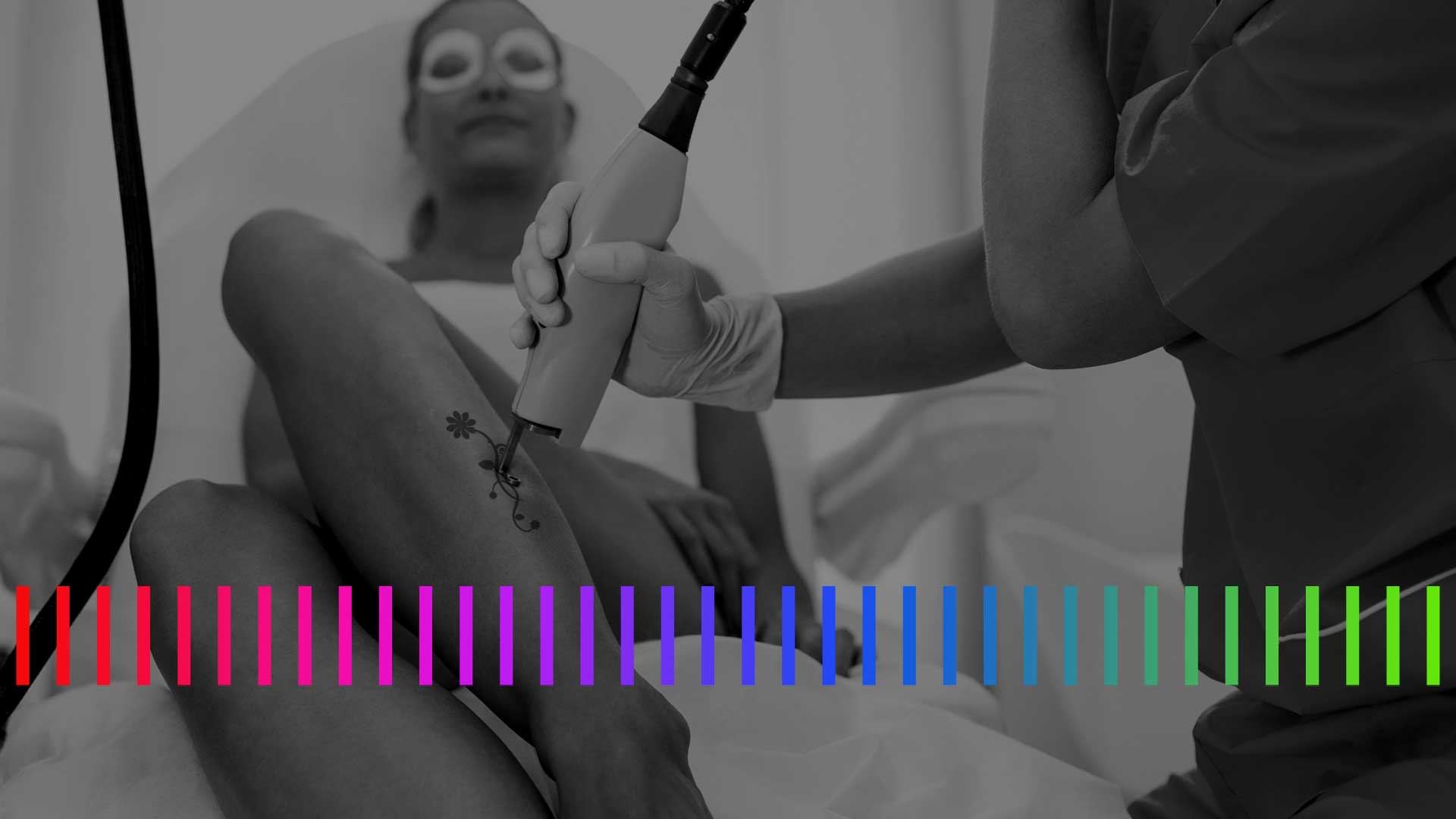
While the tattoo industry continues to thrive, the Laser Tattoo Removal industry is the fastest growing aesthetics treatment over the last few years. If you’re considering entering this field, the first step is to choose the correct technology. If you are looking to get into the tattoo removal industry, this guide outlines how laser tattoo removal works, the different wavelengths used, what to look for when purchasing equipment.
How Laser Tattoo Removal Works
Understanding the science behind tattoo removal is essential when comparing different machines. Laser devices emit short bursts of high-intensity light that target tattoo ink beneath the skin. These pulses break the pigment into tiny fragments while minimising damage to surrounding tissue.
Over time, the body’s immune system naturally eliminates these particles. With multiple sessions, tattoos that were once permanent can fade significantly or be completely removed.
Key factors that influence performance include wavelength, pulse duration, and spot size. Professional systems often offer multiple wavelengths to target various ink colours effectively. The energy delivered per pulse plays a major role in how efficiently pigment is broken down while protecting the skin.
Laser Wavelengths in Tattoo Removal
Tattoo removal typically relies on two primary wavelengths: 1064 nm and 532 nm, each targeting different ink colours. Machines that support multiple wavelengths allow practitioners to treat a broader range of pigments across different skin types, such as Q10 Laser or PicoMax.
Q-Switched Laser Wavelengths

The 1064nm wavelength targets black, blue and brown tattoo inks

The 532nm wavelength targets red, orange and purple tattoo inks

The 650nm wavelength targets light and dark green tattoo inks
The 595nm wavelength targets light and sky blue tattoo inks
Pico Laser Wavelengths

The 532nm wavelength targets red / purple tattoo inks

The 585nm wavelength targets purple / sky blue tattoo inks

The 595nm wavelength targets violet / deep blue tattoo inks

The 650nm wavelength targets green / yellow tattoo inks

The 660nm wavelength targets turquoise / green tattoo inks

The 1064nm wavelength targets yellow / orange inks
Targeting the Light Spectrum
Wavelengths exist on a spectrum. For example, 1064 nm falls within the infrared (invisible) range, while 532–785 nm sits within visible light. Shorter wavelengths like 532 nm generate more heat, often requiring longer pulse durations. In contrast, longer wavelengths like 1064 nm penetrate deeper with less surface heating.
Another key distinction is between picosecond and nanosecond lasers. Picosecond lasers deliver energy in trillionths of a second—much faster than nanosecond systems—reducing heat exposure and improving precision. For this reason, many professionals prefer picosecond technology for safer and more effective treatment
Selecting Q-Switched or Pico Laser
Q10 Laser uses Q-Switched Laser technology to produce very short bursts of energy which are capable of producing massive amounts of power instantly. This peak power is highly effective in breaking up pigmentation & colour / tattoo ink in the skin. Q10 Laser utilises a range of energy frequencies – up to 1064 nanometers – along with multiple operating modes to target deeper skin layers. It also features a spot size of up to 10mm to treat larger skin areas.
PicoMax uses Picosecond Laser technology to create an intense photoacoustic impact in trillionths of a second, PicoMax targets the chromophore for better clearance in fewer treatments while avoiding skin high thermal damage. The 1064nm wavelength targets black, blue, and green tattoo inks, while the 532nm wavelength offers effective treatment of red, yellow and orange inks, which are typically hard to correct. Thanks to higher peak power (up to 1.7GW) PicoMax can treat all kinds of tattoos and pigment lesions faster and easier.
Making the Right Choice
Selecting the right machine depends on overall quality, wavelength versatility, treatment settings, and long-term cost. These factors directly impact both treatment results and business success. Earlier tattoo removal relied heavily on Q-switched lasers, which generate more heat and carry a higher risk of skin damage. Newer picosecond technology improves precision and safety by reducing heat exposure and targeting ink more efficiently.
Laser tattoo removal has become more advanced, effective, and accessible. Whether you’re entering the field or upgrading your equipment, understanding the technology and investment involved is key to long-term success.