
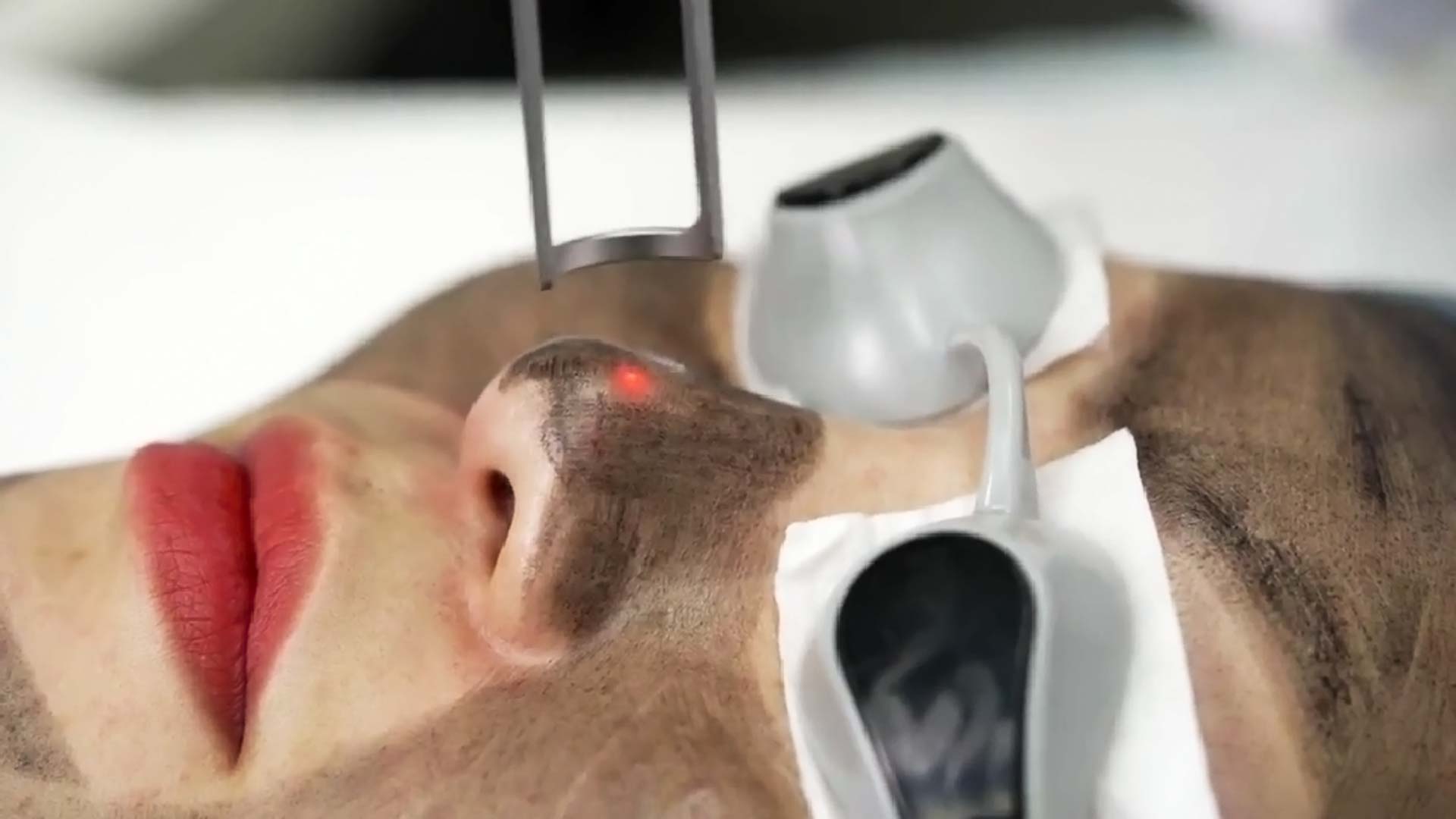
A Carbon Laser Facial is a non-invasive skin rejuvenation treatment designed to refresh, clarify, and revitalise the complexion. The treatment begins with the application of a thin layer of medical-grade carbon lotion across the skin. Once applied, a specialised laser targets and gently vaporises the carbon particles.
This process exfoliates the outer layer of the skin, removes dead skin cells, clears congested pores, and stimulates collagen production, resulting in smoother, brighter, and healthier-looking skin.
How Does a Carbon Laser Facial Work?
Q-Switch / Q-Switched Nd:YAG Laser and Picosecond Laser (sometimes called Pico Laser) are both advanced technologies that are commonly used for Carbon Laser Facials, along with various pigmentation and tattoo removal. Specifically, Q10 Laser is a Q-Switched Nd:YAG system, or PicoMax utilises Picosecond Laser, both offer Carbon Laser Facials using different technologies. COMPARE Q10 vs PICOMAX
The Carbon Laser Facial follows a structured, multi-step approach to deliver visible skin improvements:
Cleansing
The face is thoroughly cleansed to remove makeup, excess oil, and surface impurities.
Carbon Application
A thin, even layer of liquid carbon is applied. This absorbs oil, debris, and impurities from deep within the pores.
Laser Treatment
A specialised laser heats and vaporises the carbon particles, exfoliating the skin while stimulating collagen production.
Pore Purification
As the laser breaks down the carbon, pores are unclogged and tightened, leaving the skin smoother and more refined.
Skin Renewal
The controlled heat encourages collagen regeneration, helping to improve elasticity and soften fine lines.

The Many Benefits of Carbon Laser Facials
Carbon Laser Facials stand out as a highly effective skincare treatment with a wide range of benefits:
Enhanced Skin Texture: The exfoliating action leaves skin noticeably smoother and softer.
Reduced Acne and Acne Scarring: The treatment helps calm inflammation, kill acne-causing bacteria, and gradually fade acne scars.
Brighter, More Radiant Skin: By removing dead skin cells and boosting collagen, the skin appears fresher and more youthful.
Minimised Pores: The laser tightens enlarged pores, creating a more refined complexion.
Improved Skin Tone: Pigmentation issues such as sunspots and age spots are reduced, resulting in a more even skin tone.
Non-Invasive with Minimal Downtime: The procedure is gentle, requires little recovery time, and allows you to resume daily activities immediately.
Is a Carbon Laser Facial Right for Me?
Determining whether this treatment is suitable depends on your skin type, concerns, and medical background.
Skin Concerns It Can Address:
Dull or tired-looking skin: Revitalises and refreshes the complexion
Enlarged pores: Helps tighten and refine pore appearance
Acne and excess oil: Targets overactive oil glands to reduce breakouts
Uneven skin tone: Fades dark spots and blemishes
Early signs of ageing: Stimulates collagen to soften fine lines
Skin Type Considerations:
General suitability: Safe and effective for most skin types
Sensitive skin: May experience temporary redness or irritation; caution is advised
Pre-existing conditions: Conditions such as rosacea, eczema, or severe acne may require professional evaluation before treatment
Previous Treatments:
If you’ve recently undergone other skin procedures, allowing sufficient recovery time is essential. Overlapping treatments can stress the skin and increase the risk of irritation.
Managing Expectations:
Carbon Laser Facials provide noticeable improvement and rejuvenation, but results are gradual. Maintaining realistic expectations ensures satisfaction with the outcome.
Medical History:
Inform your practitioner if you are taking medications that increase photosensitivity, such as retinoids or certain antibiotics, as these may increase the risk of side effects.
Budget and Time Commitment:
Optimal results often require multiple sessions. Consider both the financial investment and the time needed for follow-up treatments and aftercare.
Post-Treatment Skincare:
What to Do and Avoid
Do’s:
Apply sunscreen daily: Use a broad-spectrum SPF to protect treated skin from UV exposure
Stay hydrated: Drink plenty of water and use suitable moisturisers
Use gentle cleansers: Avoid harsh or abrasive products
Follow professional advice: Adhere to your specialist’s aftercare instructions
Observe your skin: Report any unexpected reactions to your practitioner
Don’ts:
Avoid sun exposure: Stay out of direct sunlight for at least one week
Skip exfoliating products: Avoid acids, retinols, and exfoliants for 72 hours
Avoid excessive heat: No saunas, steam rooms, or hot showers for 48 hours
Delay makeup application: Avoid makeup for at least 24 hours
Limit strenuous activity: Avoid heavy exercise for 24–48 hours
Frequently Asked Questions
Is the treatment painful?
Most patients experience only mild tingling or warmth, often described as a light snapping sensation. It is generally painless.
What is the recovery time?
Mild redness may appear immediately after treatment but typically subsides within a few hours. Some light peeling may occur after a few days.
How many sessions are needed?
While some notice results after one session, a series of treatments spaced a few weeks apart may be recommended for optimal results.
Are there any side effects?
Common side effects include mild redness and light peeling. Sun protection is essential to prevent pigmentation issues.
Can it be combined with other treatments?
Yes, but adequate spacing between treatments is important. Always consult a professional before combining procedures.
How long do results last?
Results can last several weeks to months, depending on skin type and lifestyle. Maintenance sessions help prolong the benefits.
Is special aftercare required?
Yes, avoid sun exposure, use SPF daily, keep the skin moisturised, and avoid harsh exfoliation for at least one week.